
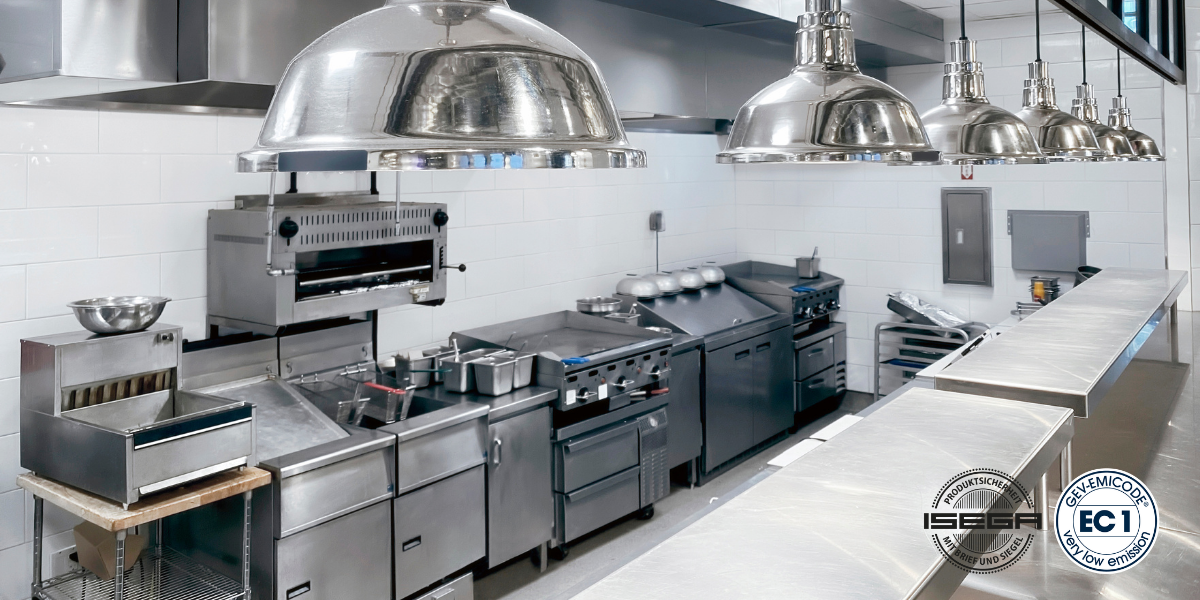

The long-term success of any floor covering depends heavily on proper substrate preparation, which is often overlooked. In kitchens and food prep areas, floors face heavy traffic, frequent cleaning, spills of grease and acids, and strict hygiene rules. Substrate preparation, together with the floor covering, helps prevent early problems like delamination, cracking, or bacteria growing in cracks.
Here are the key steps to prepare substrates for new flooring in both commercial and domestic settings.
Assessment of the existing substrate
Before starting, it’s important to carefully assess the substrate. Identify the material—whether concrete, wood, existing flooring, or something else—since each needs a different method.
Look for contamination like oil, grease, paint, or chemical spills, as these can weaken the bond of any new flooring layer.
Check moisture levels carefully because too much moisture often causes floors to fail. Tests should follow British Standards to measure moisture. New cement-based substrates need enough time to cure and dry, and sometimes a moisture control system is needed.
Inspect the substrate for cracks, spalling, or loose parts. The substrate must be sound and capable of bearing the intended loads.
Cleaning and decontamination
The aim is to get a clean, porous surface that’s ready for bonding.
Remove debris by sweeping and vacuuming all loose dirt and dust.
Use industrial-grade degreasers and detergents to remove fats, oils, and grease.
Rinse thoroughly to make sure all cleaning agents are fully washed away.
Let the substrate dry completely before moving on to mechanical preparation.
Mechanical preparation
Chemical cleaning might not be enough. Mechanical methods remove the surface layer and open the substrate’s pores, creating a mechanical key.
Shot blasting is highly effective for concrete surfaces, propelling steel shot onto the surface to clean and profile it rapidly.
Diamond grinding is perfect for edges, small spots, or removing thin coatings and leftover tile adhesive.
Scarifying removes thicker, worn-out layers or old tough floor finishes, leaving a rough surface.
The goal is a surface free of weak or loose material with an even textured profile.
Priming
Priming helps the flooring stick better and controls the substrate’s properties.
Primer soaks into the substrate pores and strengthens the bond between the substrate and the flooring system, whether it’s adhesive, membrane, or resin.
Priming also lowers concrete’s porosity, which helps stop pin-holing—when air bubbles get trapped and rise through wet floor finishes.
Certain epoxy primers can serve as moisture suppressants when construction moisture levels are high.
Repairs and smoothing the substrate
For subfloors that are not sufficiently smooth or require a height build-up to receive the chosen floor covering, a suitable smoothing compound is recommended.
A flat, sound substrate is critical for an even and durable floor finish.
Use epoxy or polymer-modified repair mortars to fill cracks and holes.
If the floor is uneven by more than a few millimetres, a smoothing compound can level it out. This is especially important for thin-set flooring like luxury vinyl tiles or sheet vinyl.
Installation of the flooring system
After preparing the substrate as described, it’s ready for the final flooring—whether tiles, resin, or sheet material.
It’s important to use the right products and installation methods. For example, coving sheet vinyl up to the skirting makes cleaning easier and stops grime and bacteria from building up.
Take care when welding resilient vinyl sheets. A well-made welded seam helps prevent grime and bacteria buildup.
Products to look out for
Dry adhesive double-sided tape, like Bostik ROLL, used for skirting, capping strips, and cove formers, helps keep things hygienic by creating a smooth joint between wall and floor. This coved detail stops grime and bacteria from gathering.
We recommend silicone sealants that are ISEGA-certified, meaning safe for food storage and prep areas, and EMICODE® EC1PLUS-certified for very low emissions and low odour. They should also be mould resistant.
Spending time and effort on substrate preparation ensures a durable, easy-to-clean floor that meets strict hygiene and safety standards in kitchens and food prep areas. If you need advice on specific preparation needs, we’re here to help with your project.
